How to Identify Your Grass Type
The treatments that keep a Bermuda lawn lush will kill a Fine Fescue. A fertilization schedule built for Kentucky Bluegrass is off-cycle for St. Augustine. Before you can care for your lawn well, you need to know what you're working with.
Here's how to identify the nine most common grass types in the US.
Cool-Season vs. Warm-Season: The First Split
All lawn grasses fall into one of two categories:
Cool-season grasses thrive when temperatures are between 60–75°F — spring and fall in most of the country. They go dormant (and often brown) in summer heat.
Warm-season grasses peak during summer heat (80–95°F) and go dormant and brown in winter.
Knowing which category you're in immediately narrows the field.
| Cool-Season | Warm-Season |
|---|---|
| Kentucky Bluegrass | Bermuda |
| Tall Fescue | Zoysia |
| Fine Fescue | St. Augustine |
| Perennial Ryegrass | Centipede |
| Bahia |
The Cool-Season Grasses
Kentucky Bluegrass

Where it grows: Northern states, Pacific Northwest, higher-elevation transition zones
How to identify it:
- Boat-shaped leaf tip (the most distinctive feature — the tip looks like the bow of a canoe)
- Folded in the bud shoot
- Medium texture, dark green color
- Forms a dense, rhizome-spreading sod that self-repairs
Kentucky Bluegrass is the classic Northern lawn grass — lush, dark, and dense when conditions are right. It needs full sun and goes dormant in summer heat.
Tall Fescue

Where it grows: Transition zone, adaptable across a wide range
How to identify it:
- Wide, coarse blades with prominent veins
- Auricles absent; membranous ligule
- Clump-forming (bunch grass) — doesn't spread by rhizomes or stolons
- Darker green than most grasses
Tall Fescue is the workhorse of the transition zone — heat-tolerant for a cool-season grass, and drought-resistant. Its clumping growth habit means it won't fill in bare spots on its own.
Fine Fescue

Where it grows: Northern lawns, shade, low-maintenance situations
How to identify it:
- Very fine, needle-like blades — the thinnest of any common lawn grass
- Soft texture
- Shade-tolerant more than almost any other grass
Fine Fescue is usually what makes up the "shade mix" blends. It's low-maintenance and thrives where other grasses fail, but doesn't handle traffic or heat well.
Perennial Ryegrass
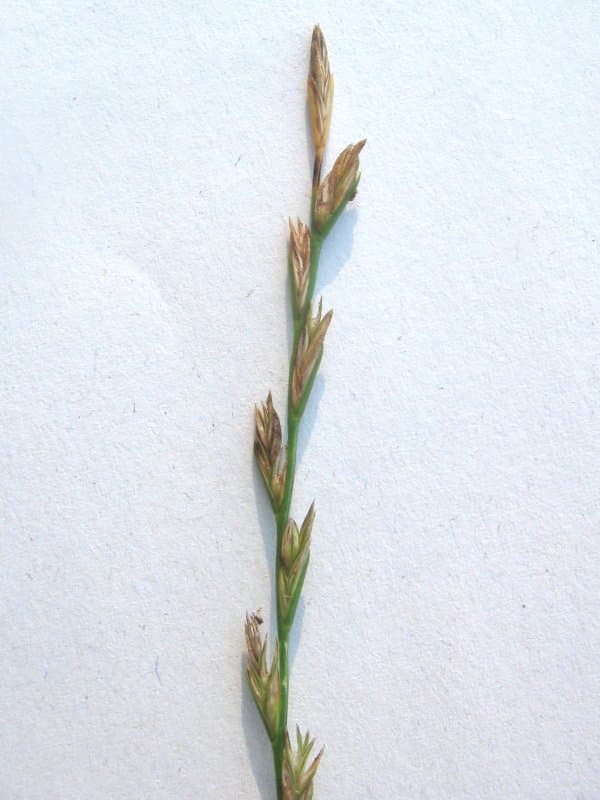
Where it grows: Northern lawns, often overseeded into warm-season turf for winter color in the South
How to identify it:
- Fine to medium texture
- Shiny, glossy underside of the blade (hold a blade up to the light)
- Fast germination — often the first grass to sprout in a seed mix
- Pointed leaf tip
Perennial Ryegrass germinates faster than any other common lawn grass (5–7 days). It's often mixed with Kentucky Bluegrass and Fescues, and used in the South to overseed dormant Bermuda for winter color.
The Warm-Season Grasses
Bermuda
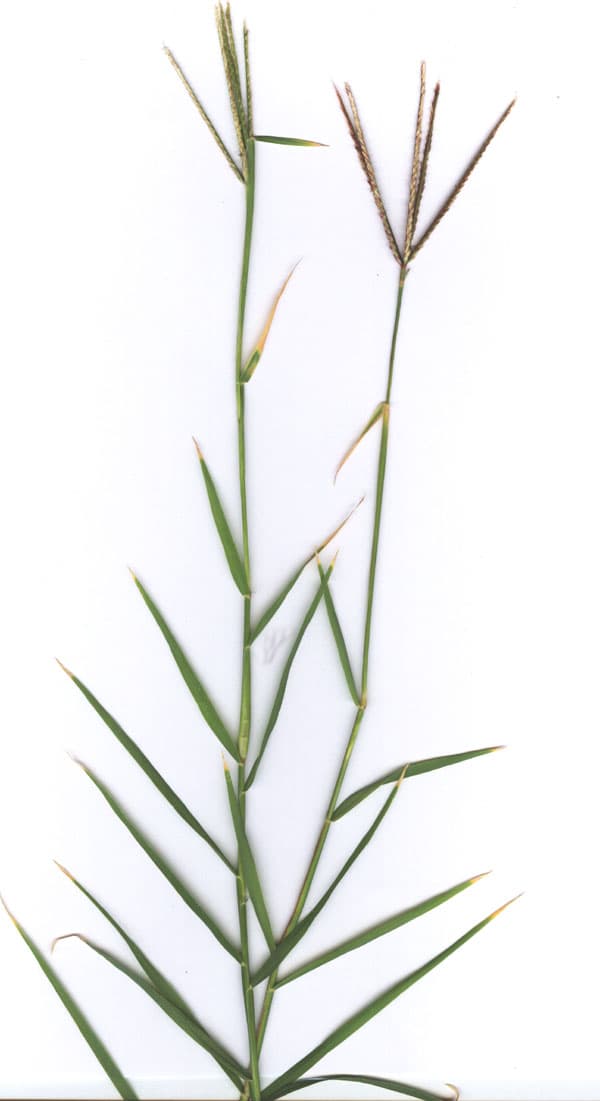
Where it grows: South, transition zone, golf courses everywhere
How to identify it:
- Fine to medium texture, gray-green color
- Spreads aggressively by both stolons and rhizomes
- Wiry stems that stay stiff even when mowed short
- Goes completely dormant and brown in winter
Bermuda is the most aggressive warm-season grass — it will spread into flower beds and neighboring lawns if not edged regularly. It needs full sun and high fertility to look its best.
Zoysia

Where it grows: South, transition zone
How to identify it:
- Fine to medium texture, stiff blades
- Dense, thick mat — almost carpet-like
- Slow to establish, slow to green up in spring
- Very stiff to the touch — harder than Bermuda or St. Augustine
Zoysia forms one of the densest turf surfaces of any grass, which makes it naturally weed-resistant once established. The tradeoff: it's the last to green up in spring and the first to go dormant in fall.
St. Augustine

Where it grows: Coastal South, Gulf Coast states, Florida
How to identify it:
- Broadest blades of any common lawn grass — coarse texture
- Rounded leaf tip (blunt, not pointed)
- Spreads by stolons only (above-ground runners)
- Dark green, lush appearance
St. Augustine is the dominant grass across Florida and coastal areas. It handles shade better than other warm-season grasses but is sensitive to cold and doesn't survive in the transition zone or further north.
Centipede

Where it grows: Southeastern US, especially the Carolinas through Texas
How to identify it:
- Medium texture, light green to apple-green color (notably lighter than other warm-season grasses)
- Low-growing, slow-growing
- Spreads by short stolons
- Very low fertilizer requirement (too much nitrogen damages it)
Centipede is the "lazy lawn" grass — it's intentionally low-maintenance, requiring far less mowing, fertilizer, and water than most grasses. Its light green color is normal, not a sign of nitrogen deficiency.
Bahia

Where it grows: Florida, Gulf Coast
How to identify it:
- Coarse, tough blades
- V-shaped seed heads on long stalks (very distinctive when the grass flowers)
- Spreads by rhizomes, tough root system
- Tolerates drought and poor soils better than most grasses
Bahia is common in Florida pastures and low-maintenance lawns. It's extremely durable but coarse-textured and produces seed heads constantly, which many homeowners find annoying.
Still not sure? Take a close-up photo of your grass blades and compare leaf tips, texture, and color. Your local cooperative extension service can also identify your grass type if you bring in or mail a sample.
Photos via Wikimedia Commons, licensed under CC BY-SA 3.0.